Examples
The repository has a small app for each host in
examples/. Each one opens a skin you
pick, draws its windows, plays a made-up track and passes the pointer to the engine. They follow
the host guides and stay short enough to read in one sitting.
Each one shows Winamp’s own skins, the base skin and Winamp Modern, downloaded from the
Winamp Skin Museum. Those are Winamp’s art, so the repository
doesn’t ship them. When a download fails, an example shows one of the two original skins in
examples/skins instead, a
classic one and a modern one. Each example also has a button or key that opens these directly.
Each example puts the free fonts that stand in for Windows’ Arial and Tahoma, from
examples/skins/fonts, under every skin, where the engine looks for them. A classic playlist
then sets its rows in Arial’s widths, as Winamp does.
Any other .wsz or .wal opens too. Under every classic skin, each example puts Winamp’s base
skin (the original classic skin when the download fails) as its base skin,
so a skin that draws only its main window shows Winamp’s equalizer and playlist. A modern skin
that borrows frames, scrollbars or lists from Winamp’s wasabi base also
needs it, as a zip: each example takes one with its “Wasabi base” button.
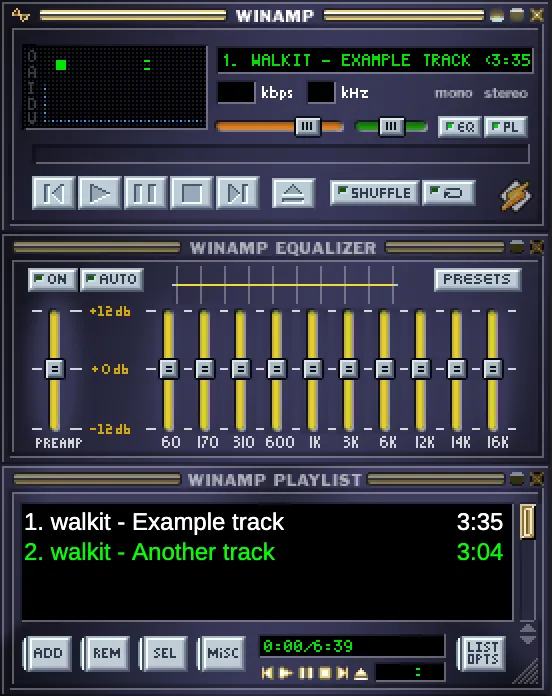
examples/web is a page on the
walkit-web package, as the Web guide describes: one canvas per window, laid out
apart as on a desktop.
tools/web-pack.sh examples/web/walkit-webpython3 -m http.server -d examples 8000Android
Section titled “Android”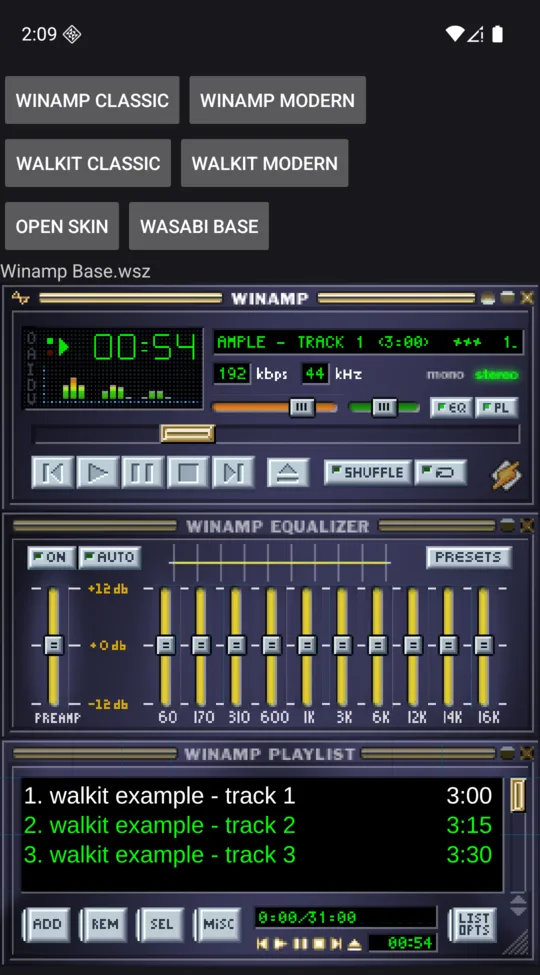
examples/android is an app on
the AAR, as the Android guide describes: buttons for the two Winamp skins,
an “Open skin” button, a “Wasabi base” button, and a view that runs the skin, draws every command on a Canvas and passes touches
to the engine. It builds the library from source through an includeBuild, so it needs the same
toolchain.
cd examples/android./gradlew assembleDebug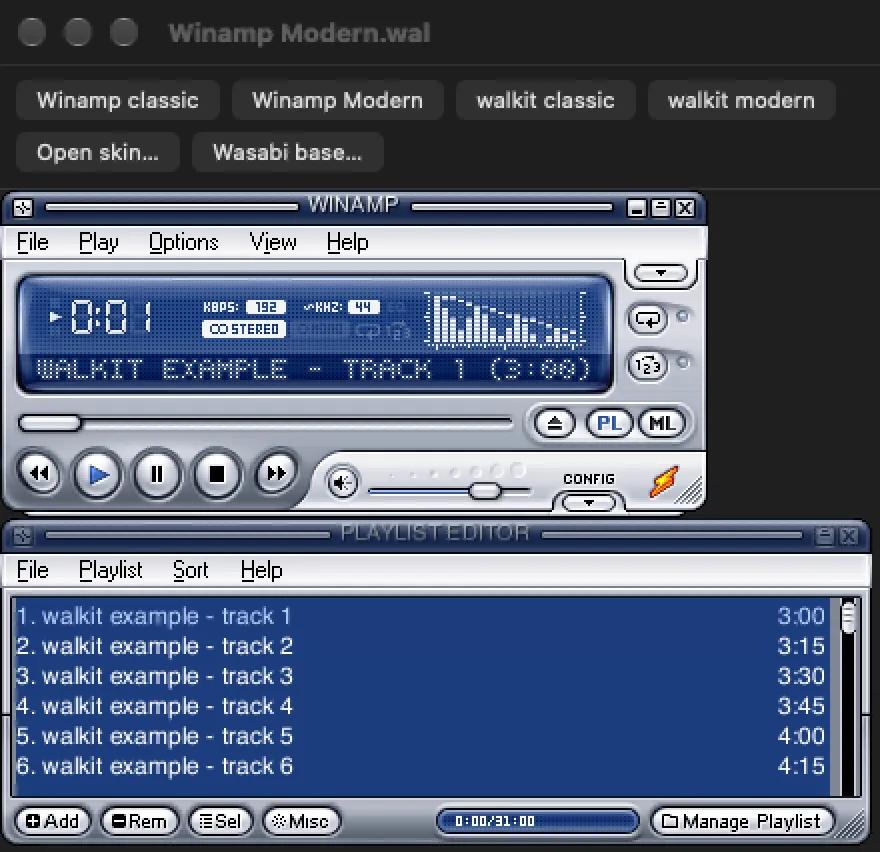
examples/macos is a SwiftUI app
on the walkit crate, as the Rust guide describes. A small Rust library in the
example wraps the engine behind a C interface: it unzips the skin, decodes its pictures with
image, measures and draws text with the engine’s
truetype feature, as Winamp draws it, and renders the draw list in software, window
shapes included. The Swift side has the same buttons as the Android app (“Winamp classic”,
“Winamp Modern”, “walkit classic”, “walkit modern”, “Open skin”, “Wasabi base”), downloads the
skins, shows each frame and passes the mouse to the engine. It needs Xcode and Rust; the Xcode
project builds the library with Cargo.
cd examples/macosxcodebuild -project WalkitExample.xcodeproj -scheme WalkitExample -derivedDataPath build buildopen build/Build/Products/Debug/walkit.appOr open WalkitExample.xcodeproj in Xcode and run it. The skin’s windows are set out apart, as
on the web: drag one by its title bar anywhere in the app’s window, which resizes. Drop another
skin on the window to open it.